Review: Rooster with Floral Pattern Redwork
As a designer who has spent countless hours staring at digitized files and watching needles dance across fabric, I have developed a keen eye for what works in the real world. We often get caught up in the digital preview, where every line looks crisp and every color pops against a white screen. But the true test of any machine embroidery design is how it translates to physical texture, thread tension, and the final finished product. Recently, I evaluated the Rooster with Floral Pattern Redwork, a piece that sits comfortably within the Floral Wreaths category but brings a distinct rustic charm that sets it apart from standard botanical motifs.
First Impressions and Visual Personality
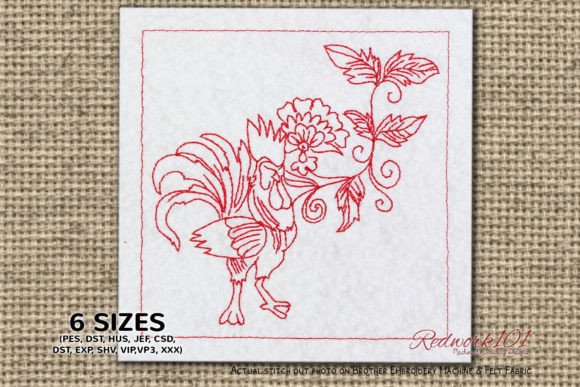
The first thing that strikes you about this design is its balance. Redwork, traditionally known for its single-color running stitch aesthetic, relies heavily on line weight and spacing. This Rooster with Floral Pattern Redwork manages to capture the intricate details of the rooster’s plumage without becoming a dense mess of thread. The floral elements surrounding the central figure are not merely filler; they frame the subject with an organic flow that feels intentional rather than automated.
The mood here is unmistakably farmhouse chic, yet it retains enough elegance to fit into modern cottage-core trends. For an Etsy seller or a craft business owner, this visual personality is crucial. It speaks to customers looking for warmth, tradition, and handmade quality. The layout suggests a design that breathes, allowing the fabric to show through, which is essential for maintaining the delicate nature of redwork.
Real-World Application: From Digital File to Handmade Product
To truly understand the value of this embroidery file, I imagined it in several practical scenarios. Picture a natural linen tote bag. The contrast of deep red thread against the neutral, textured canvas creates an immediate focal point. This isn't just a tote bag design; it becomes a statement piece for farmers' markets or grocery runs. The durability of the running stitch, provided the stitch density is appropriate, holds up well to the wear and tear such items endure.
Consider also sweatshirt embroidery. Placing this design on the left chest of a heather grey crewneck offers a subtle, sophisticated look. It avoids the bulkiness that often plagues larger designs on knit fabrics. For those creating personalized gifts, such as kitchen towels or aprons, the rooster motif ties directly into culinary themes. It feels at home in a kitchen, adding a touch of artisanal flair to everyday tools. The design’s versatility allows it to transition seamlessly from holiday embroidery projects during autumn and winter to year-round custom apparel.
Technical Considerations for the Embroiderer
While the aesthetic appeal is strong, practical execution requires attention to detail. The product description notes that the Box Stitch shown in promotional images is optional. This is a critical detail for any embroidery project. If you choose to include the box, ensure the color contrasts sufficiently with both the background fabric and the redwork itself. In many designs, the outer box serves as a framing device, but if it clashes, it can distract from the central rooster.
When working with redwork, thread choice is paramount. A matte cotton thread often enhances the traditional look, while polyester might add an unwanted sheen. You must check the thread colors against your specific fabric. On dark fabrics, standard red may disappear. In such cases, consider using a brighter crimson or even adapting the design for applique if the client prefers a bolder look, though this particular file is optimized for stitching.
Fabric texture plays a significant role here. On smooth quilting cotton, the lines will appear sharp and defined. On textured linen or toweling, the stitches may sink slightly, softening the overall appearance. This can be a desirable effect for a rustic vibe but might reduce clarity if the stabilizer is not chosen correctly. Always use a cut-away stabilizer for garments that will be washed frequently, ensuring the design maintains its shape over time.
Navigating Challenges: Hoop Size and Fabric Types
One must be cautious when scaling this design. Redwork relies on fine lines. If you shrink the Rooster with Floral Pattern Redwork too much to fit a small hoop size, such as a 4x4 inch hoop for an embroidered patch or a baby item, the details may merge. The gaps between stitches could close up, leading to puckering or a loss of definition. Always test the design on scrap fabric at the intended size before committing to your final material.
Stretchy fabrics present another challenge. While the design is suitable for baby embroidery on onesies, the lack of fill stitches means there is less structural support. Proper hooping and stabilization are non-negotiable to prevent distortion. Similarly, on curved surfaces like caps, the flat nature of the floral wreath layout might require adjustment or careful placement to avoid wrapping awkwardly around the curve.
Commercial Value and Brand Consistency
For small shop product creators, consistency is key to building brand trust. This design offers a high level of professionalism due to its clean lines and balanced composition. It enhances the perceived value of the handmade product because it looks deliberate and skilled. When used in printable mockup previews for your online store, ensure the lighting highlights the texture of the stitch. Buyers engage more with images that show the tactile quality of the embroidery.
Whether you are selling digital embroidery file assets or finished goods, understanding the license terms is vital. Before listing items for sale, confirm whether the design allows for commercial use. This step protects your craft business and ensures you are respecting the creator's intellectual property. If the license permits, this design can become a staple in your portfolio, appealing to buyers who appreciate traditional motifs with a modern twist.
Final Designer Notes
Before launching into production, take these practical steps. First, stitch out a test sample on the exact fabric you plan to use. Check for thread breaks or nesting, which can occur if the tension is too tight. Second, review the design in black and white on your computer screen. This helps you see the contrast and flow without the distraction of color. Third, inspect the small details of the floral elements. Are they clear? Do they connect smoothly to the rooster?
The Rooster with Floral Pattern Redwork is a versatile asset for any designer’s library. It bridges the gap between traditional craftsmanship and contemporary design needs. By paying attention to fabric choice, stabilizer type, and scale, you can transform this digital asset into a stunning physical reality. Whether for a boutique branding effort, a heartfelt gift, or a best-selling item in your online store, this design holds up under scrutiny. It reminds us that in embroidery, simplicity often requires the most skill, and this rooster delivers that simplicity with confidence.